
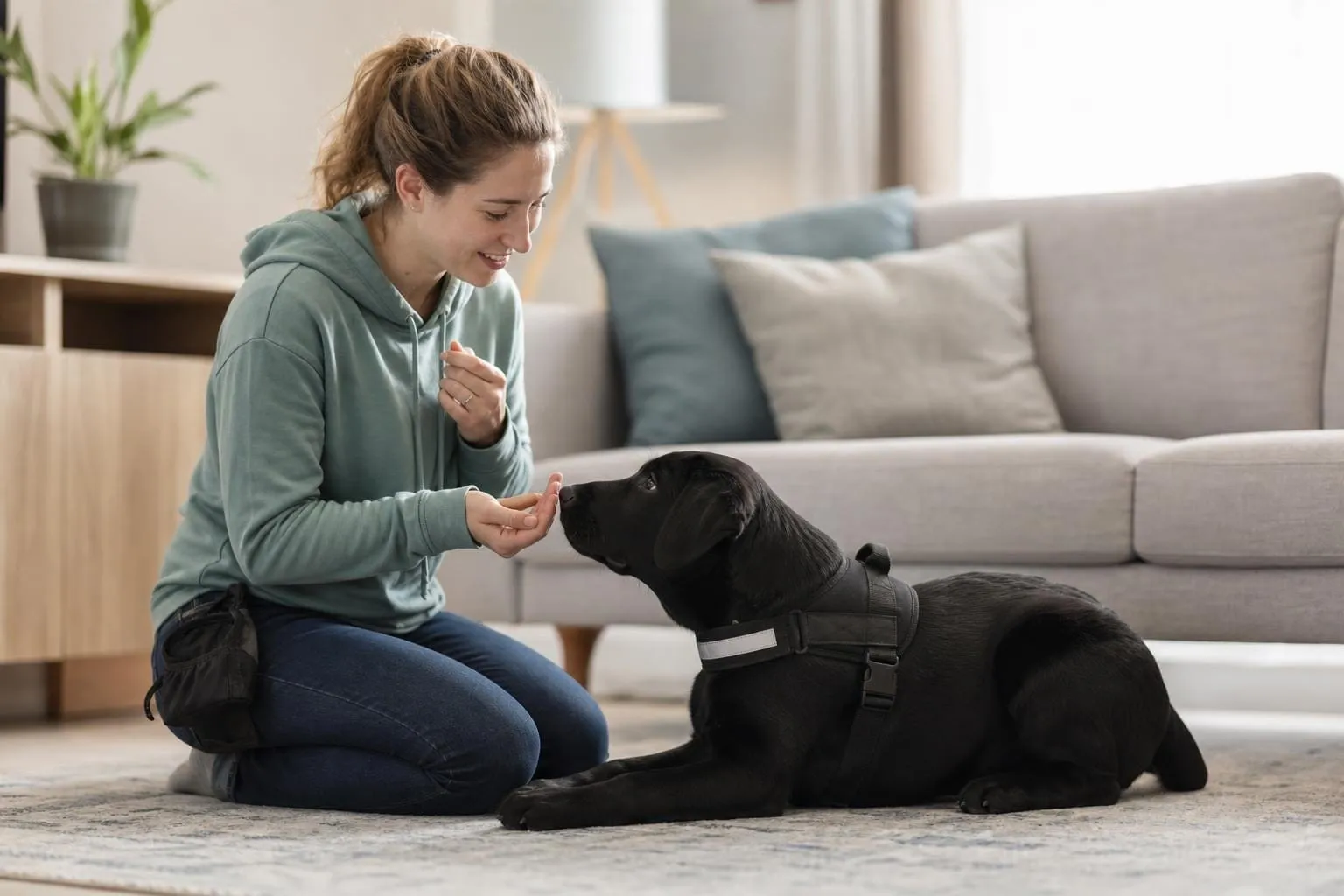
Training a service dog at home is completely legal under the ADA. The process moves through four phases: temperament screening, foundation obedience, task-specific training, and public access work. Washout rates for owner-trained dogs exceed 50%, so honest temperament evaluation upfront is critical. This guide covers every phase, common mistakes, and online courses that can fill the gaps.
A professionally trained service dog costs between $15,000 and $50,000, and most programs have waiting lists stretching two to five years. For many people with disabilities, that combination of cost and delay isn’t just inconvenient. It’s a barrier to the independence they need right now.
The good news: under the Americans with Disabilities Act, you can train your own service dog at home. No professional trainer is required. No certification body needs to sign off. No government registry exists. The ADA requires only two things: the handler has a disability (a physical or mental impairment that substantially limits one or more major life activities), and the dog is individually trained to perform specific tasks that mitigate that disability.
Research confirms the value of service dogs for conditions like PTSD, and a growing number of handlers are choosing the owner-training path. But this isn’t a weekend project. Expect to invest 18 to 24 months, at least one hour per day, and real emotional energy, including the possibility that your dog won’t make it.
Here’s how to do it right.
Training Path | Cost | Timeline | Best For | Key Tradeoff |
|---|---|---|---|---|
Program-trained dog | $15,000–$50,000 | 2–5 year wait | Handlers who need a guaranteed outcome | Long waits, very expensive |
Board-and-train | $15,000–$40,000 | Several months | Handlers with budget but limited time | You still must learn to handle the dog |
Private trainer (weekly) | $5,000–$15,000 | 1+ year | Handlers wanting hands-on expert guidance | $150–$250/hour adds up fast |
Owner-training with coaching | $2,000–$7,000 | 18–24 months | Budget-conscious handlers with daily time | Higher washout rate, steep learning curve |
Online courses (standalone) | $299–$2,497 | Self-paced | Supplementing any training path | Most cover obedience, not disability-specific tasks |
A former dog trainer on Reddit put it bluntly: board-and-train setups can be “horrific” because “dog training is all about training the human to train their dog.” That insight captures why at-home, handler-centered training often produces a stronger working team than handing your dog off to someone else.
👉 Explore service dog registration and training options to get started.
Before you start any training, get clear on what the law actually says.
The ADA does not require a specific training program or school, a minimum number of training hours, professional trainer involvement, certification by any government or private body, or registration in any database. Owner-trained service dogs are common and fully legal.
Businesses are permitted to ask only two questions: (1) Is this a service animal required because of a disability? (2) What work or task has the dog been trained to perform? They cannot ask about the nature of your disability, demand documentation, or require a demonstration.
One important distinction: a service dog is not the same as an emotional support animal. Service dogs perform trained tasks; ESAs provide comfort through companionship but don’t have public access rights under the ADA. If you’re unsure which category applies, learn the key differences before investing months of training.
A note on service dogs in training (SDITs): Under federal ADA rules, dogs still in training are not yet considered service animals. However, many states (California, for example) grant public access rights to SDITs. Check your state’s specific laws before taking your trainee into public spaces.
This step saves more time, money, and heartbreak than any other. Not every dog, no matter how beloved, is cut out for service work.
Here’s a practical test that trainers recommend: drop a metal bowl behind your dog in a quiet room. A strong candidate startles, then re-engages with you within a couple of seconds. A dog that stays rattled, hides, or shuts down will struggle with the unpredictability of public access work.
Beyond the startle test, evaluate:
Recovery speed. How quickly does the dog bounce back from unexpected stimuli?
Focus on handler. Does the dog naturally check in with you, or does every squirrel represent a total meltdown?
Sociability without overexcitement. The dog should be calm around strangers, not lunging to greet every person.
Low reactivity to other dogs. Barking, lunging, or cowering around other dogs are serious red flags.
This is the part most guides skip, and it’s arguably the most important.
Only 50 to 60% of purpose-bred puppies that begin formal training with professional organizations successfully graduate as working service dogs. For owner-trained dogs, the washout rate averages over 50%, and some estimates suggest you should plan for washing out two of every three prospects.
That said, Psychiatric Service Dog Partners offers a contrasting perspective: anecdotally, about 75% of dogs entering owner training achieve service dog status, partly because owner-trainers can work around issues that program dogs get washed for.
Either way, go in with eyes open. If your dog washes out, you still have a wonderful pet. But if you’re counting on a specific dog making it, the emotional and financial disappointment can be significant.
Review the conditions a service dog helps with to ensure your training goals align with recognized task work.
Any breed can legally be a service dog under the ADA, but temperament matters far more than pedigree.
Labrador Retrievers (55–80 lb): Consistently high communication skills. The most common service dog breed for good reason.
Golden Retrievers (55–75 lb): High empathy paired with strong handler awareness. They track their handler’s emotional state closely.
Standard Poodles: Highly intelligent, low-shedding, and athletic. Often the first choice for handlers with allergies. Poodles learn service tasks fast and excel at medical alert and psychiatric support.
German Shepherds: Loyal and trainable, though their natural protectiveness requires careful socialization.
Mixed-breed rescues: Assess the individual, not the label. Temperament stability under novelty, plus recovery time after a startle, predict success better than any breed guess.
Puppies offer the advantage of shaping behavior from the start. Calm, well-socialized adults can sometimes complete training in 12 to 18 months instead of the full 24.
The socialization window closes around 16 weeks of age, making this the most time-sensitive phase. Everything that follows, from obedience to public access, depends on what happens here.
Aim for controlled, positive exposure to:
People: 50 different people including children, elderly individuals, people in wheelchairs, people wearing hats or uniforms.
Surfaces: At least 20 different textures (grass, metal grates, tile, rubber mats, gravel, wet pavement).
Sounds: Traffic, sirens, vacuums, doorbells, dropped items, crowds.
Environments: 10+ locations weekly, from quiet parks to busier areas, always keeping sessions short and positive.
Crate training. A crate-trained dog settles faster in unfamiliar environments.
Name recognition. Say the name, mark the look with a clicker or “yes,” then treat.
Clicker conditioning. This is a behavioral psychology method: the click marks the exact moment your dog does the right thing, then a treat follows. It creates a precise feedback loop that speeds up every training phase that comes after.
House training. Consistent schedule, immediate reward for going in the right spot.
Core commands form the backbone of every service dog’s working life. Your dog needs to perform these reliably in progressively distracting environments.
Essential commands:
Sit and Down (duration and distance)
Stay (30 seconds, then build to several minutes)
Come (reliable recall, even with distractions)
Heel (walking position at your side, not just loose leash)
Loose leash walk (for casual movement)
Place (go to a mat or bed and settle)
Touch (nose to hand, useful as a redirect)
Look/Watch me (eye contact on cue)
Capturing vs. Luring. Luring uses a treat to guide the dog into position; capturing waits for the dog to offer the behavior naturally, then marks it. Capturing builds more thoughtful dogs. Use luring to introduce new behaviors, then phase it out quickly.
Treat hierarchy. Not all rewards are equal. Use low-value treats (regular kibble) for easy tasks and high-value treats (chicken, cheese) for difficult behaviors or distracting environments.
Session length. Keep sessions to five to ten minutes. Multiple short sessions throughout the day beat one long one. Practitioners on Reddit’s r/service_dogs community consistently emphasize that short, frequent sessions produce better retention than marathon training blocks.
This is what separates a service dog from a well-trained pet. The dog must perform at least one task directly related to your disability.
Deep pressure therapy (DPT): Dog applies body weight to handler’s lap or chest during anxiety or panic episodes.
Grounding: Nudging or pawing to interrupt dissociative episodes.
Medication reminders: Alerting at set times.
Nightmare interruption: Waking the handler during night terrors.
Crowd buffering: Positioning between handler and others in public.
Retrieving dropped items
Opening doors and drawers
Light switch operation
Bracing for balance support (only for dogs over 55 lb with proper body structure)
Carrying items
To see the full range of recognized tasks, learn what qualifies a psychiatric service dog under current guidelines.
A task learned in your living room is not a task learned. Period. You must practice each task across multiple environments: living room to kitchen, kitchen to backyard, backyard to quiet store, quiet store to busy café. If you skip this step, your dog will perform beautifully at home and freeze in the real world.
Public access is where service dog training at home gets real. Before stepping into any public space, simulate the scenarios at home first.
Set up a table, chairs, and family members eating a meal. Have your dog practice settling underneath while everyone eats. Drop a napkin. Scrape a chair. Have someone walk past. Once your dog masters this controlled setting, move to a quiet outdoor café.
The sequence matters:
Empty parks or quiet sidewalks during off-hours.
Calm, pet-friendly businesses during their slowest times. Home improvement stores work well because they have different floor surfaces and moderate activity.
Busier retail environments with more foot traffic.
Restaurants, medical offices, and crowded spaces.
At each stage, your dog should demonstrate calm behavior before moving to the next level.
Experienced handlers are emphatic about this. Exposing your service dog in training to dog parks or high-distraction pet-centric areas doesn’t strengthen their skills. It dulls them. It trains them to tune in to the wrong things: other dogs, chaos, unpredictable animals. One guide dog owner told CBC that poorly trained service dogs “really don’t have the right training or temperament to be in public. They misbehave, they growl, and their humans let them do things that a guide dog handler never would.”
Understanding proper etiquette for service dogs helps you know what to expect and demand in public settings.
The International Association of Assistance Dog Partners recommends 120 hours of training logged over at least six months. Your dog should reliably:
Enter and exit doorways calmly
Heel through a building without pulling
Perform sit, down, and stay on cue in public
Navigate retail aisles without sniffing products
Completely ignore dropped food
Stay focused on you even when other dogs pass
Recover quickly from loud noises or sudden crowds
Lie down quietly under a table or beside your chair in a restaurant setting
If your dog can’t consistently pass these benchmarks in controlled tests, they are not ready for public access work.
Online courses can fill gaps, provide structure, and give you access to professional feedback you wouldn’t have otherwise. But most “online service dog training” courses are actually general obedience plus public access training. True task-specific training for medical alert, deep pressure therapy, or mobility work almost always requires customization and often some professional guidance.
Best for: Handlers wanting a structured, self-paced program with professional support
Price: $399
Format: Self-paced online course with trainer Q&A, logbook, and app
Key features: Covers obedience through public access; includes a training logbook to document hours; positioned as 95% cheaper than in-person training
Tradeoffs: Self-paced means self-motivated; task-specific training may still require additional customization for your disability
👉 Browse training and gear options at USA Service Dog Registration.
Best for: Handlers wanting structured, tutor-guided progression
Price: Tiered pricing (not publicly disclosed)
Format: 10-week structured program with assigned tutor
Key features: Includes evaluation and certification process; detailed instruction covering all aspects of training
Tradeoffs: Fixed 10-week timeline may not suit all learners; pricing opacity makes comparison harder
User signal: TrustScore 4.8 out of 5 based on 386 reviews
Best for: Budget-conscious handlers wanting trainer support
Price: Varies by program
Format: Online with trainer support
Key features: Claims to be 95% cheaper than in-person training; multiple program options
Tradeoffs: General obedience focus rather than service-dog-specific curriculum; variable quality depending on the specific course selected
User signal: 1,460 reviews on Trustpilot with generally positive ratings

Best for: Psychiatric service dog handlers specifically
Price: Varies
Format: Self-guided video program
Key features: Focused specifically on psychiatric service dog training from home; self-guided structure
Tradeoffs: Self-guided means no live feedback; limited to psychiatric service dog tasks
User signal: 4.6 rating from 4,000+ reviews
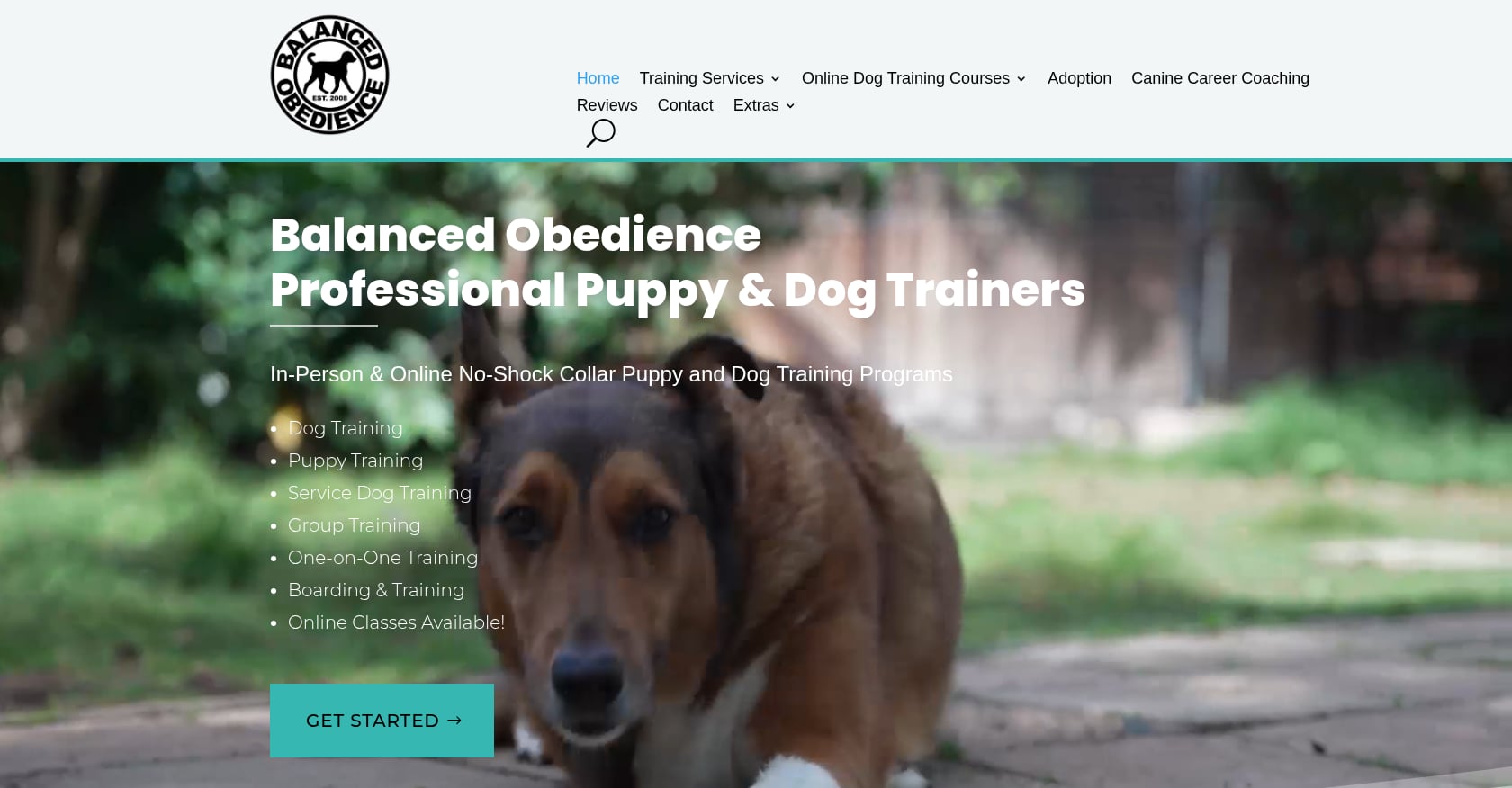
Best for: Handlers who want video feedback on their technique
Price: Not publicly disclosed
Format: Online with video feedback submission
Key features: Step-by-step instructions for each part of the public access test; you submit video for professional review
Tradeoffs: Not a full service-dog training curriculum; primarily focused on PAT preparation; limited info on pricing upfront
User signal: Over 10,000 dogs trained
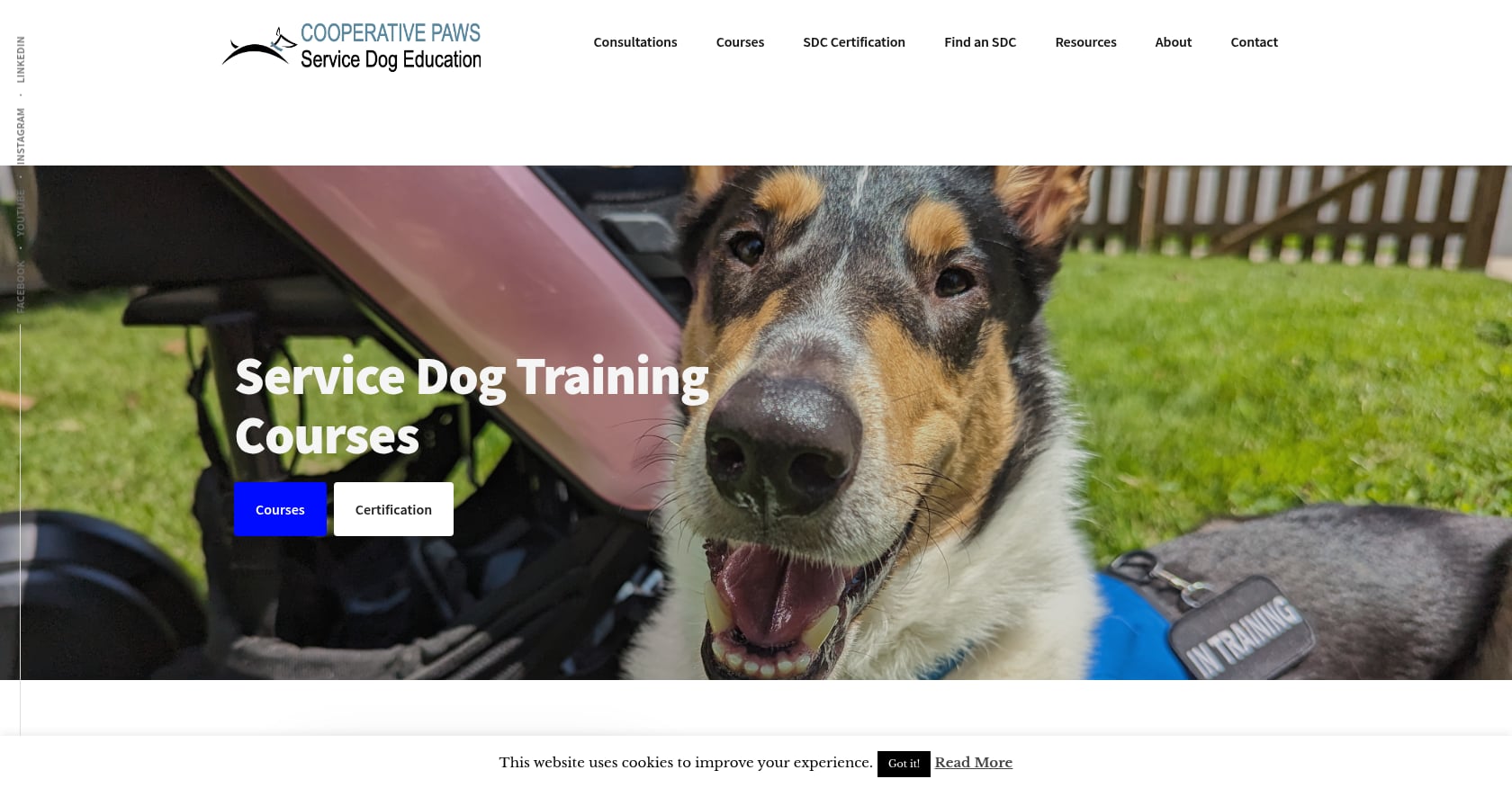
Best for: Quick fundamentals overview or career exploration
Price: Not publicly disclosed
Format: Online, approximately 4 hours total
Key features: Concise program; 3-month access window; CPDT-KA instructor
Tradeoffs: Very short (4 hours); more of a fundamentals/career course than a comprehensive training program; not designed for full service dog preparation
User signal: Positive testimonials from certified trainers
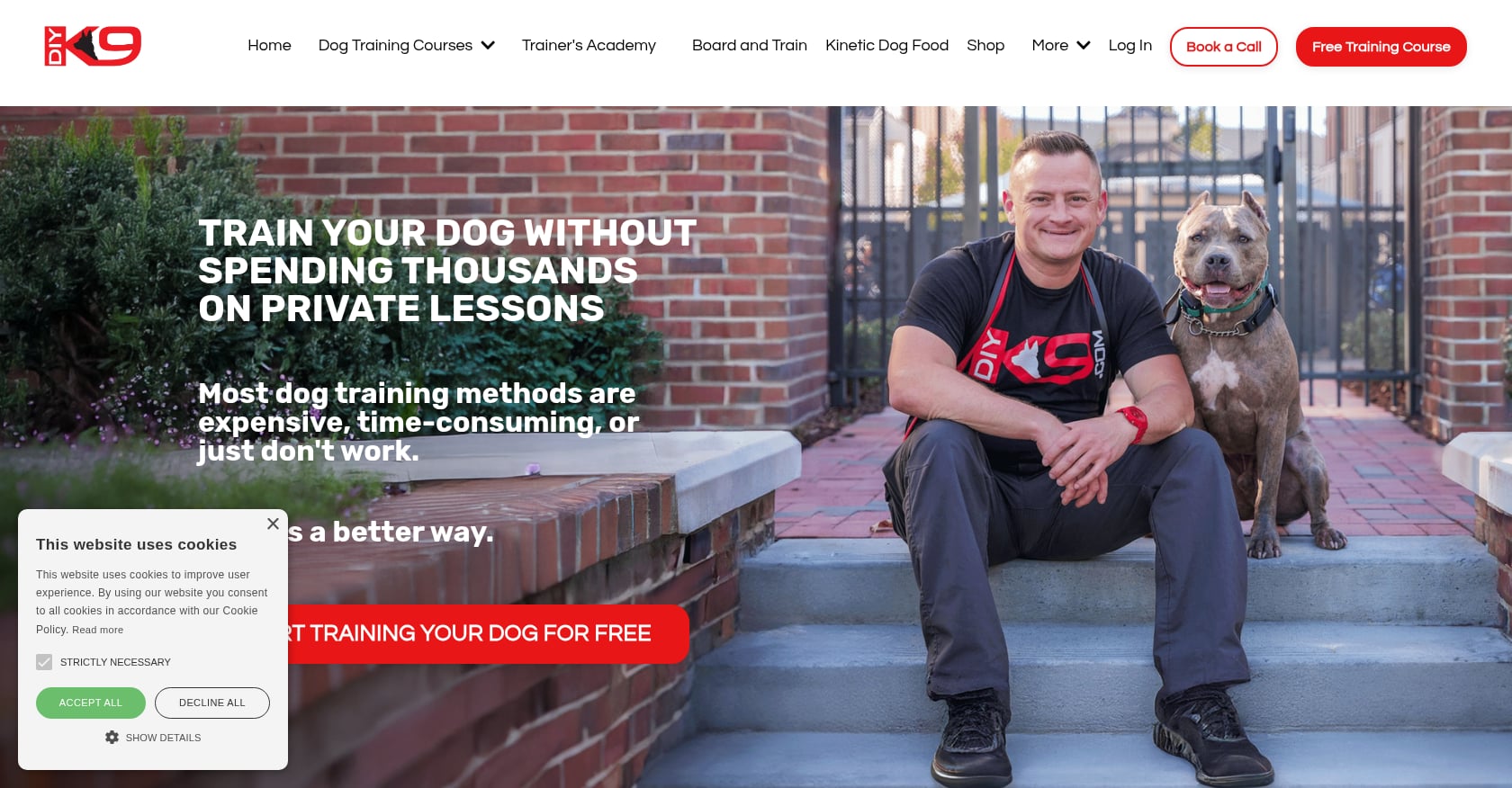
Best for: Handlers wanting a range of training methodology options
Price: $119–$2,497
Format: Pre-recorded video courses by Garret Wing
Key features: Five courses covering different approaches; three use positive reinforcement, two use e-collar techniques
Tradeoffs: General obedience, not service-dog-specific; wide price range can be confusing; the premium tier is expensive for pre-recorded content
User signal: Community feedback notes the price tag is steep compared to alternatives
After months of training, these errors can undo everything. Each one comes directly from handlers and trainers who’ve seen them play out repeatedly.
Skipping the socialization window. The critical period closes around 16 weeks. You cannot fully make up for missed socialization later. A dog not exposed to diverse stimuli during this period will always be playing catch-up.
Rushing to public access. Moving to stores and restaurants before your dog’s foundation is rock solid is the fastest way to create a dog that falls apart in public. Master each phase before advancing.
Inconsistent handler behavior. If “down” means “lie down” on Monday and “get off the couch” on Wednesday, your dog will learn that commands are suggestions. Everyone in the household must use the same cues and rules.
Using dog parks for “socialization.” This has been covered above, but it bears repeating. Dog parks teach your service dog to focus on other dogs instead of you. That’s the opposite of what you need.
Not planning for washout. If you’ve spent 12 months training a dog who ultimately can’t handle public access work, having a backup plan (financially and emotionally) matters. Some handlers start with two prospects simultaneously for this reason.
Neglecting maintenance training. A fully trained service dog still needs 5 to 10 minutes of daily practice. Ask for a “sit” before meals, practice “heel” during walks, work on “stay” while making coffee. Owner-training is time-consuming, and successful training consists of active and passive components. You must be able to devote at least one hour every day for 9 to 18 months during active training.
While the ADA does not require any ID, vest, certificate, or registration for service dogs, these items serve a practical purpose: they reduce confrontations and speed up interactions with businesses, landlords, and security personnel.
Essential training tools:
Clicker (or consistent verbal marker)
Treat pouch worn at your hip
Standard 6-foot leash (not a retractable)
Settle mat for “place” training
High-value and low-value treats
Identification gear:
Service dog vest or harness (a visual signal that significantly reduces questions in public)
ID card with handler and dog information
Patches that clearly identify the dog as a working animal
To understand vest and ID options that reduce public friction, compare what’s available before your dog reaches the public access phase.
Training logbook: The IAADP recommends documenting at least 120 hours of training over six months or more. Even if no law requires it, a logbook protects you if your dog’s training is ever questioned and helps you track what’s working.
Real-world access disputes do happen. A Days Inn once denied a veteran with a service animal access to the hotel, illustrating exactly why proper training, clear identification, and documentation matter.
Once your service dog is trained, you’re not done. A working service dog needs ongoing maintenance to keep skills sharp. Every day, spend 5 to 10 minutes reinforcing commands during normal activities. Practice “heel” during walks. Ask for a “down-stay” while you cook dinner. Run through task-specific behaviors weekly.
Periodically retest your dog against the public access test checklist. Skills can degrade, especially tasks the dog doesn’t perform daily. Catching a slide early is much easier than retraining from scratch.
👉 If you’re ready to begin, explore training resources and gear to support your service dog training at home journey.
Expect 18 to 24 months for a puppy starting from scratch. A calm, well-socialized adult dog may reach working status in 12 to 18 months. The process covers five overlapping phases from socialization through public access generalization, and rushing any phase increases washout risk.
No. The ADA does not require registration, certification, or ID for service dogs. However, voluntary registration, vests, and ID cards can reduce day-to-day confrontations and make public access smoother. They are social signaling tools, not legal requirements.
Legally, yes. The ADA places no breed restrictions on service dogs. Practically, temperament matters far more than breed. Labrador Retrievers, Golden Retrievers, Standard Poodles, and German Shepherds are popular choices, but a mixed-breed dog with the right temperament can succeed just as well.
They become a beloved pet. This happens to over 50% of owner-trained dogs. The best approach is to accept this possibility from the start, avoid sinking money into expensive gear before your dog proves capable, and consider having a backup plan. Some handlers begin evaluating a second prospect while training their first.
No. Service dogs perform trained tasks that directly mitigate a disability and have full public access rights under the ADA. Emotional support animals provide comfort through companionship and are protected under the Fair Housing Act for housing, but they have no public access rights. Learn more about how they differ.
Most owner-trained handlers spend $2,000 to $7,000 total spread over the training period, covering supplies, veterinary care, classes or online courses, and gear. That’s a fraction of the $15,000 to $50,000 for a program-trained dog.
Under the ADA, any physical or mental impairment that substantially limits one or more major life activities qualifies. This includes mobility impairments, PTSD, severe anxiety disorders, diabetes, epilepsy, visual or hearing impairments, and many others. See the full list of qualifying conditions for details.
Landlord rules around service animals and documentation can be complex. Under the Fair Housing Act, landlords can request documentation of a disability-related need but cannot demand specific training certificates. For guidance on navigating landlord documentation requests, understand your rights before any conversation.

Copyright © 2020 USA Service Dog. All rights reserved.