
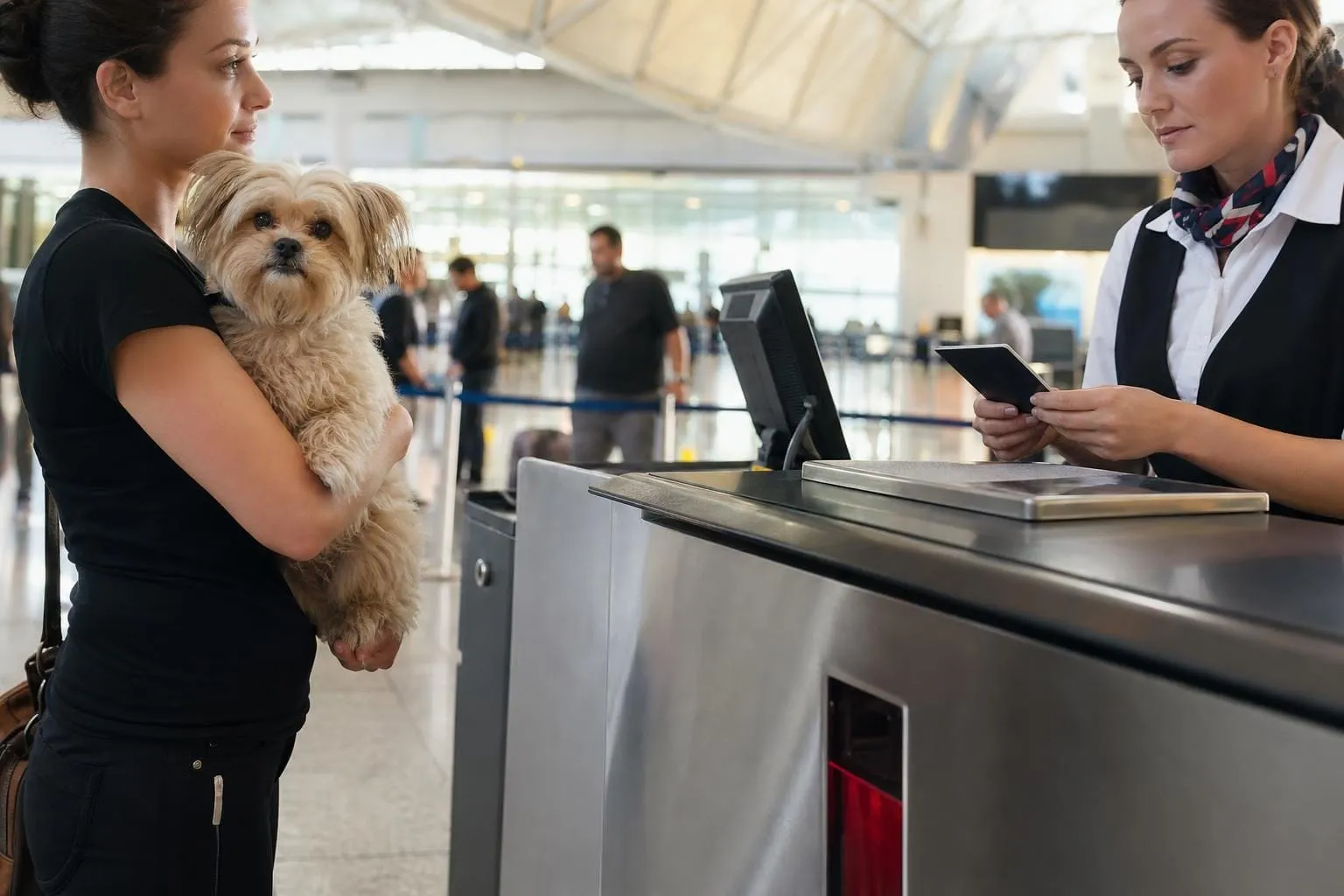
Since January 11, 2021, emotional support animals (ESAs) have no special protections on U.S. airlines. The Department of Transportation revised its rules so that only trained service dogs qualify as service animals for air travel. ESAs are now treated as pets, subject to standard pet fees ranging from $50 to $150 each way. Psychiatric service dogs (PSDs), however, still fly free. ESA letters remain valid for housing under the Fair Housing Act, just not for flights.
The rules around emotional support animals and air travel changed dramatically in 2021, and confusion still runs deep. People show up at airports expecting their ESA will be accommodated, only to be turned away at the gate. One commenter on a travel forum described trying to fly with their emotional support dog in early 2025: “American Airlines never reviewed my dog documents at all. And my dog can’t fly this day.” That frustration is common, and it stems from a gap between what the rules used to be and what they are now.
This guide breaks down every aspect of ESA rules for airlines, from the federal regulation that triggered the change to the practical realities of flying with an animal today.
Understanding the differences between ESAs and service dogs is the first step toward knowing your rights.
ESA rules for airlines refer to the federal regulations governing whether and how emotional support animals can travel in aircraft cabins on U.S. commercial flights. The short answer: since January 2021, they can’t, at least not with any special status.
The U.S. Department of Transportation published a final rule on December 10, 2020, revising the Air Carrier Access Act (ACAA) regulations under 14 CFR Part 382. The rule took effect on January 11, 2021. Its central change was removing emotional support animals from the definition of “service animal” for air travel purposes.
Under the revised regulation, a service animal is defined as “a dog, regardless of breed or type, that is individually trained to do work or perform tasks for the benefit of a qualified individual with a disability.” That’s it. No cats, no miniature horses, no untrained comfort animals. Only task-trained dogs.
The DOT didn’t make this change arbitrarily. The agency cited five specific problems that had been building for years:
Increasing service animal complaints from passengers and crew
Inconsistent definitions of “service animal” across airlines
Disruptions caused by unusual species brought into cabins (the viral emotional support peacock incident in 2018 was just one example)
Fraudulent misrepresentation of pets as service animals to avoid fees
Rising misbehavior by emotional support animals on flights
The numbers back this up. A survey of flight attendants found that 61 percent had witnessed an emotional support animal causing a disturbance mid-flight. Airlines were also hemorrhaging money, as travelers discovered that an ESA letter was a convenient workaround to avoid pet fees exceeding $100 each way. The DOT’s own analysis estimated the rule change would save airlines between $15.6 million and $21.6 million annually.
For deeper context on how airports and airlines tightened their animal policies even before the rule, see this overview of shifting policies.
This is where most of the confusion lives. Three categories of assistance animals exist under U.S. law, and each one has different rights.
Emotional Support Animal (ESA) | Service Dog | Psychiatric Service Dog (PSD) | |
|---|---|---|---|
Training required | None (provides comfort through presence) | Individually trained for specific tasks | Individually trained for psychiatric tasks |
Species | Any animal | Dogs only (for airlines) | Dogs only (for airlines) |
Airline rights (2026) | None, treated as a pet | Flies free, protected under ACAA | Flies free, same rights as any service dog |
Housing rights | Protected under Fair Housing Act | Protected under FHA and ADA | Protected under FHA and ADA |
Documentation for flights | N/A | DOT Service Animal form | DOT Service Animal form |
Example tasks | N/A | Guiding a blind handler, alerting to seizures | Interrupting panic attacks, deep pressure therapy, grounding during dissociative episodes |
The critical distinction: psychiatric service dogs are not the same as emotional support animals. A PSD is task-trained to mitigate a specific psychiatric disability. That training is what gives them legal standing under airline rules. An ESA provides comfort through companionship alone, which no longer qualifies.
Airlines must treat psychiatric service dogs exactly like any other service dog. They cannot require extra documentation from a mental health provider beyond what they’d ask of any other service animal handler.
Looking into the PSD pathway? Here’s a cost breakdown for psychiatric service dogs that covers what to expect.
If you’re flying with a legitimate service dog (including a PSD), you need to know about two DOT forms.
This is the primary form required by all U.S. airlines for service animal travel. The handler attests to the animal’s health, behavior, and training. It’s a federal document, not an airline-specific one.
Key rules:
Airlines can require the form once per trip. A round-trip ticket counts as one trip, meaning you only fill it out once for both legs.
Many airlines, including American Airlines, require submission at least 48 hours before departure. Same-day requests may be denied if the form isn’t already on file.
American Airlines has implemented a notable improvement: passengers receive a service animal number valid for a year, so they don’t need to resubmit the form every time they fly.
This second form applies only to flights lasting 8 hours or more. It attests that the animal can either relieve itself in a sanitary way or go the duration without needing to.
In 2024, U.S. Senators Tammy Duckworth and Ron Wyden sent a letter to the DOT highlighting serious problems with these forms. The forms are only available as PDFs, making them difficult to use on mobile devices and nearly impossible for screen readers. This is particularly burdensome for frequent business travelers who may need to fill out the same information multiple times per week, since most airlines (unlike American) require a new submission for each trip.
This is a real pain point that practitioners on disability forums regularly bring up. The irony of a disability accommodation form that isn’t accessible to people with disabilities hasn’t been lost on the community.
Yes, your ESA can still fly. It just flies as a pet, with all the costs and restrictions that come with that.
Airline | In-Cabin Pet Fee (Each Way) |
|---|---|
Allegiant | $50 |
Frontier | $99 |
Alaska | $100 |
American | $150 |
Delta | $150 |
United | $150 |
JetBlue | $150 |
Source: NerdWallet airline pet fee analysis
Beyond the fee, most airlines require pets to stay in an airline-approved carrier that fits under the seat in front of you. This creates a hard size limit. If your ESA is a large dog, it likely cannot fly in the cabin at all. Some airlines offer cargo transport for larger animals, but fees can run anywhere from $200 to over $1,000, and not all breeds or routes are eligible.
A round-trip domestic flight with a medium-sized dog now costs $100 to $300 in pet fees alone, plus the cost of a carrier. That’s the financial reality for ESA owners in 2026.
A handful of international carriers still recognize ESAs, including LATAM, Volaris, and Lufthansa. LATAM is the most permissive, allowing emotional support animals in the cabin at no extra charge on select routes to and from Argentina, Mexico, and Colombia.
Here’s the catch that most guides miss: these airlines do not accept ESAs on routes to or from the United States. Since U.S. law no longer grants ESAs special status, the accommodation only applies on non-U.S. routes. If you’re flying from Miami to Bogotá on LATAM, your ESA travels as a pet. This is a critical nuance, and getting it wrong means a surprise at the check-in counter.
This is the biggest source of ongoing confusion. ESA letters, the documents issued by licensed mental health professionals recommending an emotional support animal, are completely irrelevant to airline travel in 2026. No U.S. airline will accept an ESA letter as grounds for bringing an animal into the cabin without a pet fee.
Some websites still sell “airline ESA letters” or “travel ESA letters.” These are worthless for air travel. Anyone charging you for a letter that promises free cabin access for your ESA on a U.S. airline is either misinformed or running a scam. Learn more about how to avoid fake ESA letter scams.
However, ESA letters absolutely still matter for one major purpose: housing. Under the Fair Housing Act, landlords must provide reasonable accommodations for tenants with ESAs, including waiving pet fees and breed restrictions. A legitimate ESA letter from a licensed therapist remains the key document for exercising that right.
If you’re wondering what a therapist should include in an ESA letter for it to hold up with landlords, that’s worth reviewing separately.
The 2021 DOT rule changed air travel only. It did not touch housing protections. These are two entirely separate legal frameworks:
Air travel is governed by the Air Carrier Access Act (ACAA), enforced by the DOT
Housing is governed by the Fair Housing Act (FHA), enforced by HUD
Under the FHA, emotional support animals are recognized as assistance animals. Landlords cannot charge pet fees or deposits for them, cannot impose breed or weight restrictions, and must provide reasonable accommodations when a tenant has a legitimate ESA letter from a licensed clinician.
There’s a recent wrinkle worth noting. On May 22, 2026, HUD narrowed its federal Fair Housing Act enforcement for emotional support animals. In states that have their own ESA or fair housing protections (which is most states), state-law rights remain unaffected. But in states that relied exclusively on federal FHA protections, landlords now have more room to ask whether an animal is individually trained for a disability-related task.
This doesn’t eliminate ESA housing rights, but it does shift the ground in a small number of states. For anyone navigating this, understanding what evidence HUD requires for an assistance animal accommodation request is more important than ever.
Colleges and universities are another area where ESA housing rights apply. Many schools now accommodate students with ESAs in dorms and campus housing, following the same FHA framework.
A Colorado couple was awarded $50,000 after their HOA refused to allow their emotional support animal, showing that ESA housing protections carry real enforcement weight.
If you have an emotional support animal and want to travel by air, here are your realistic options:
Option 1: Fly your ESA as a pet. Pay the pet fee, buy an approved carrier, and follow the airline’s pet policy. This works for small to medium dogs and cats. It does not work for large animals that can’t fit under a seat.
Option 2: Explore the psychiatric service dog pathway. If you have a qualifying psychiatric disability and your dog is individually trained to perform specific tasks related to that disability, your animal may qualify as a PSD. Psychiatric service dogs fly free on all U.S. airlines with only the DOT form required. This isn’t a loophole; it’s a legitimate legal framework for people whose dogs are genuinely task-trained. The key word is “trained.” Simply rebranding an ESA as a PSD without actual task training is both illegal and counterproductive.
Option 3: Drive or use ground transportation. For shorter trips, this sidesteps the entire issue.
Option 4: Use your ESA letter where it still works. For housing, your letter remains powerful. Don’t let the airline rule change make you think your ESA documentation is useless. It’s not, it just applies to a different legal context.
If you need an ESA letter for housing or want to explore PSD documentation, check out the ESA letter and housing guide for current requirements.
Yes, but only as a pet. You’ll pay the airline’s standard pet fee ($50 to $150 each way), your animal must fit in a carrier under the seat, and you’ll follow the same rules as any other pet owner. No U.S. airline recognizes ESAs as service animals.
No. The DOT Service Animal Air Transportation Form is exclusively for trained service dogs. If your animal is an ESA traveling as a pet, you just need to follow the airline’s pet booking process and pay the fee.
Airlines can only refuse a service dog for documented aggressive behavior or if the dog poses a direct threat. They cannot refuse based on breed. However, they can require the DOT Service Animal Air Transportation Form to be submitted in advance (typically 48 hours).
An ESA letter is written by a licensed therapist stating you have a disability-related need for an emotional support animal. It works for housing under the Fair Housing Act. A PSD letter documents that you have a psychiatric disability and a dog trained to perform specific tasks to mitigate it. For airlines, only PSD status (backed by task training, not a letter) matters. Airlines rely on the DOT form, not clinician letters.
Yes. The Fair Housing Act protections for ESAs are entirely separate from airline rules. A valid ESA letter from a licensed mental health professional still requires landlords to provide reasonable accommodations, including waiving pet fees and breed restrictions. Learn more about what landlords can and cannot require.
No U.S. airline treats ESAs differently from pets. Some international carriers (LATAM, Volaris, Lufthansa) still accommodate ESAs on certain routes, but not on flights to or from the United States. On any U.S.-bound or U.S.-departing flight, ESA rules for airlines treat your animal as a pet.
Potentially, if you have a qualifying psychiatric disability and your dog can learn specific tasks related to that disability. Tasks might include interrupting panic attacks, performing deep pressure therapy, or providing grounding during dissociative episodes. The training must be genuine and task-specific. Simply having your dog’s presence calm you down does not count as task training under the ACAA definition.
The DOT cited rising complaints about ESA behavior on flights, widespread fraud (people misrepresenting pets as ESAs to avoid fees), safety incidents involving untrained or unusual animals, and inconsistent airline policies. The rule change aligned the ACAA definition of “service animal” more closely with the ADA definition, which has never included emotional support animals.
Need help understanding your rights or getting proper documentation for your service dog or ESA? Explore service dog and ESA resources to find what applies to your situation.

Copyright © 2020 USA Service Dog. All rights reserved.